01
Location gated the conversation
The flow couldn't progress until the expected location input was provided.
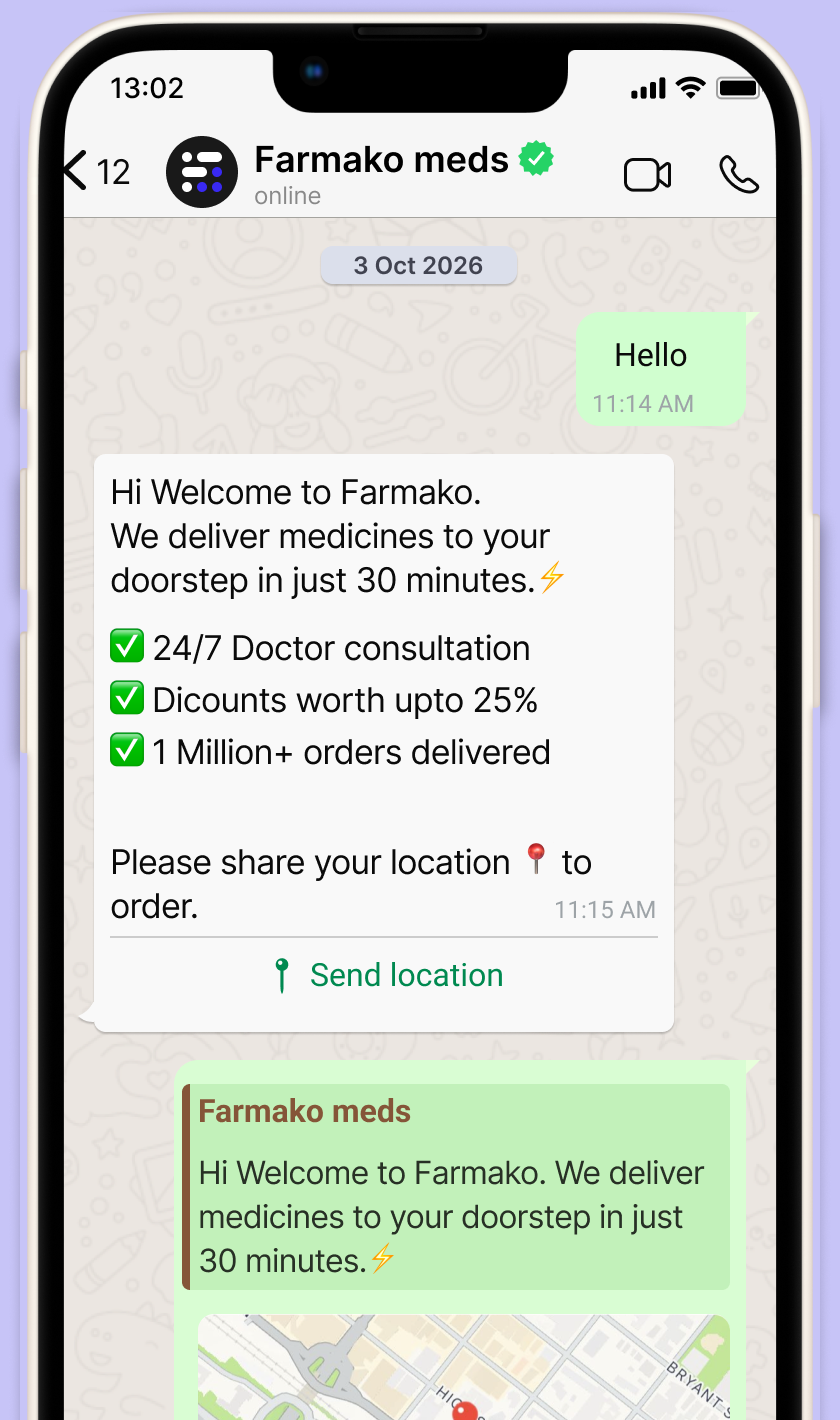
FARMAKO CONVERSATIONAL UX
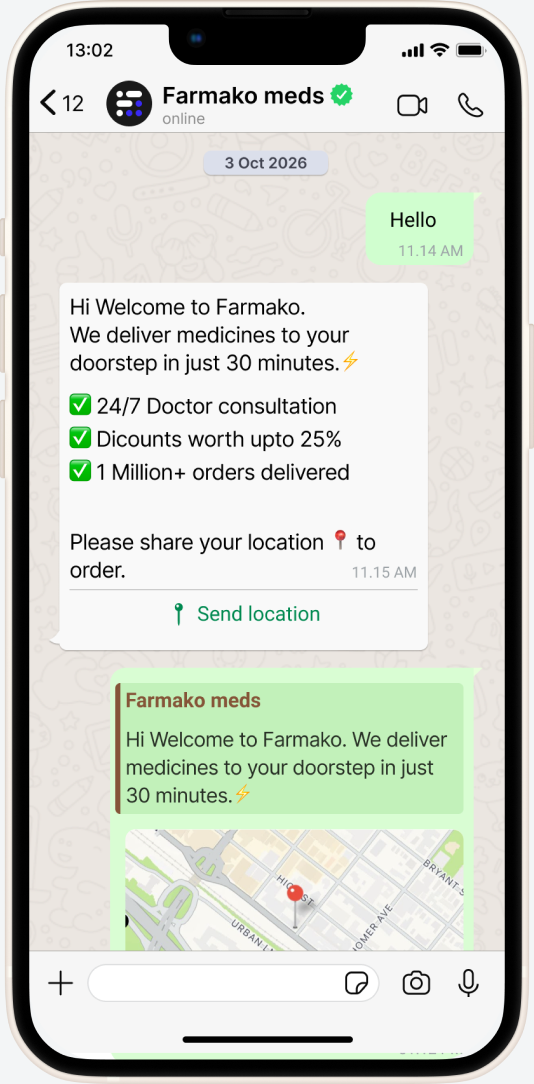
Customers came to WhatsApp to find out whether their medicines were available. But the ordering flow required information (location, address details, etc.) before it could respond to their needs.
I explored how to make the experience more helpful for users.
CONTEXT
Farmako's one of the order channels was WhatsApp. But the flow felt nothing like a conversation. Users messaged expecting an interaction that would help them get medicines urgently, but instead they were asked a series of questions like a form filled out before being admitted.
SELF CONVERSATIONAL AUDIT
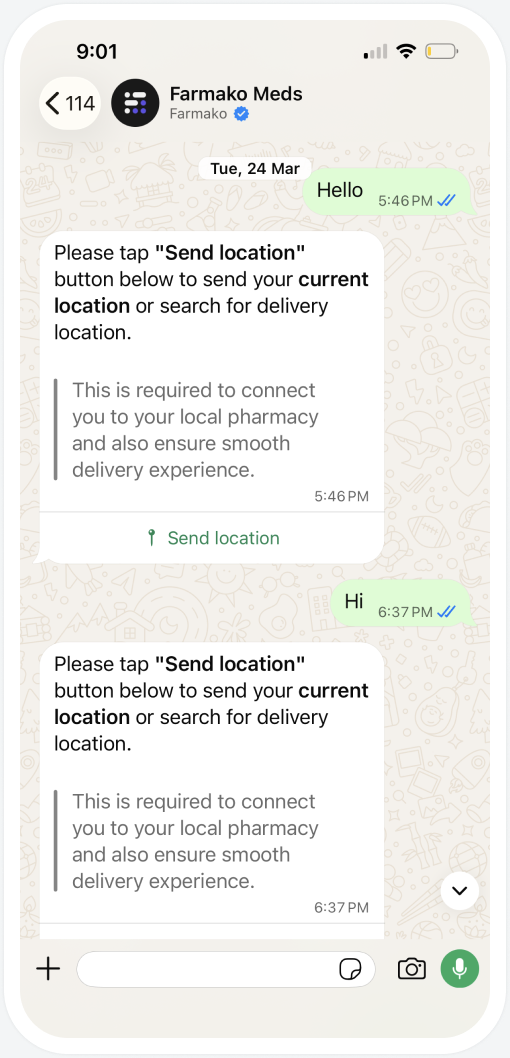
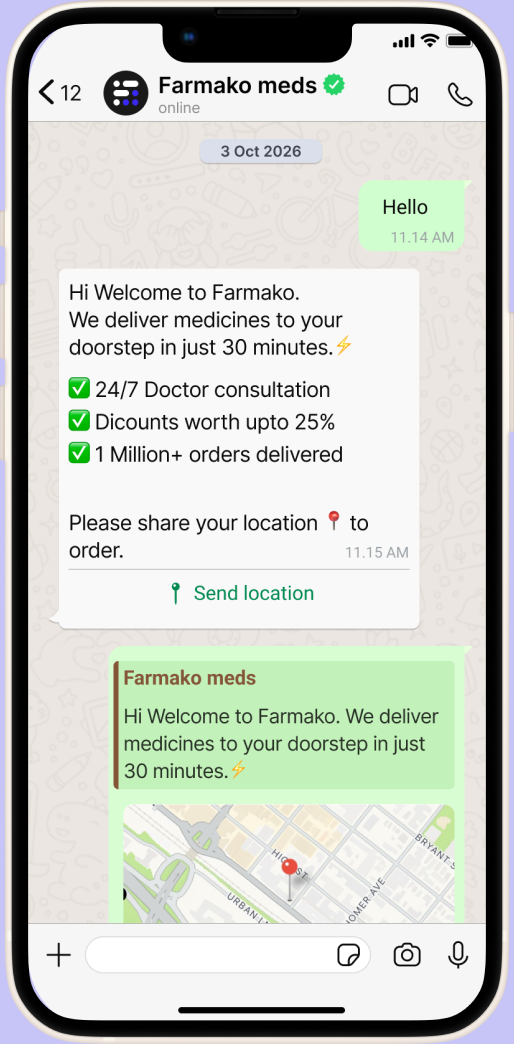
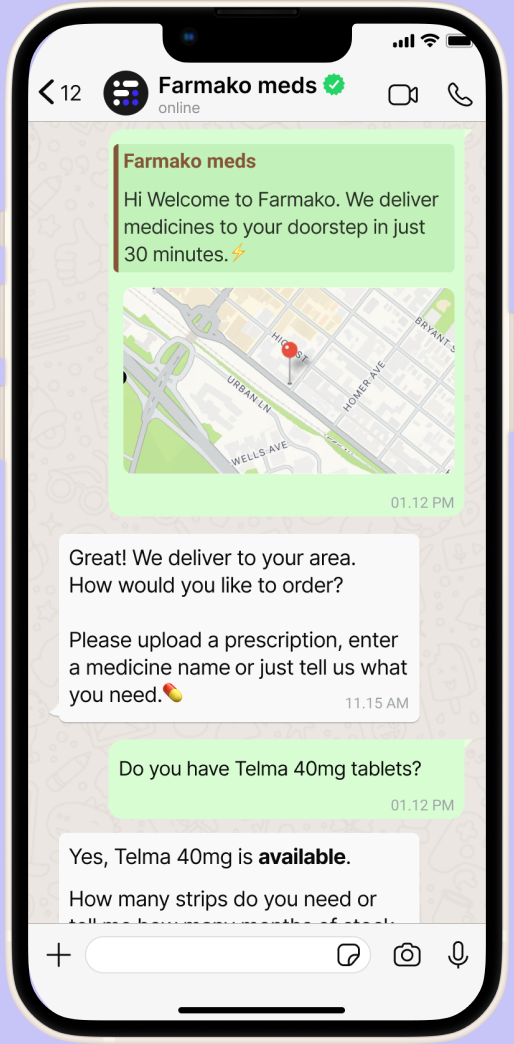
I started auditing the conversation by myself by trying different chat prompts.
01
The flow couldn't progress until the expected location input was provided.
02
When I responded again, the flow repeated the same prompt instead of helping me recover.
ANALYSIS
I reviewed real WhatsApp orders to understand how users navigated the existing flow.
01
Instead of responding with location, some users continued by sharing the medicine they wanted.
02
Some users wanted to know whether a medicine was available before progressing through the ordering flow.
03
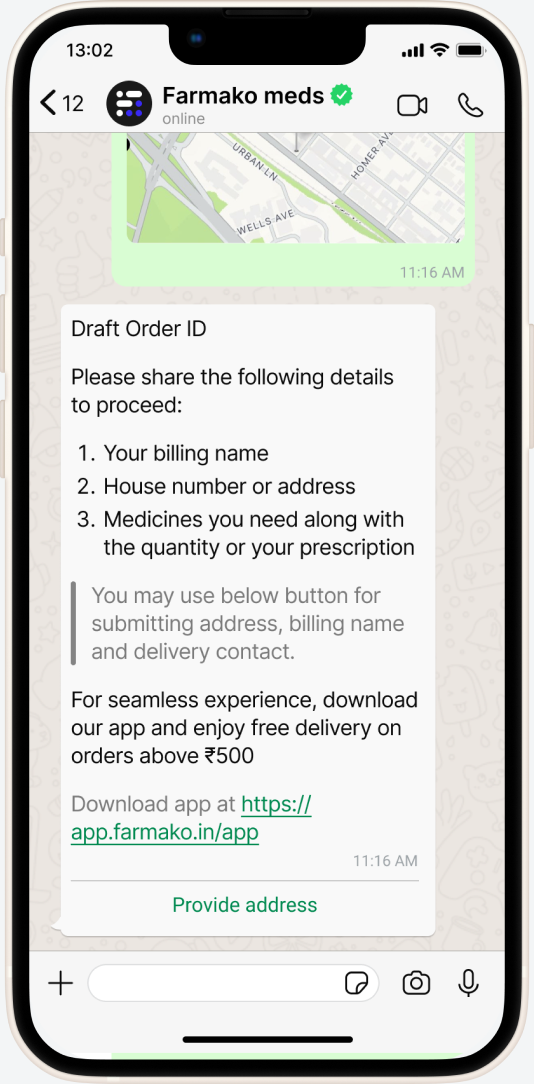
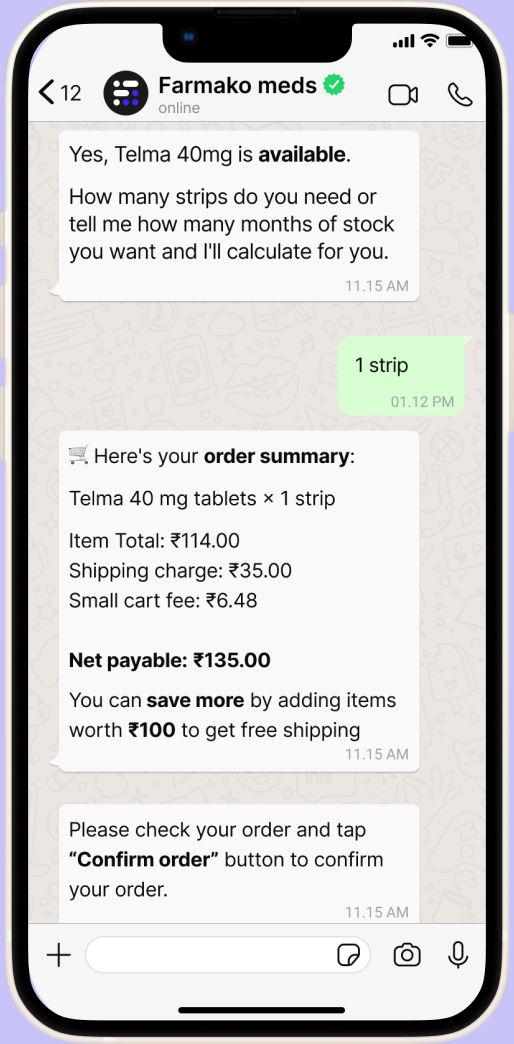
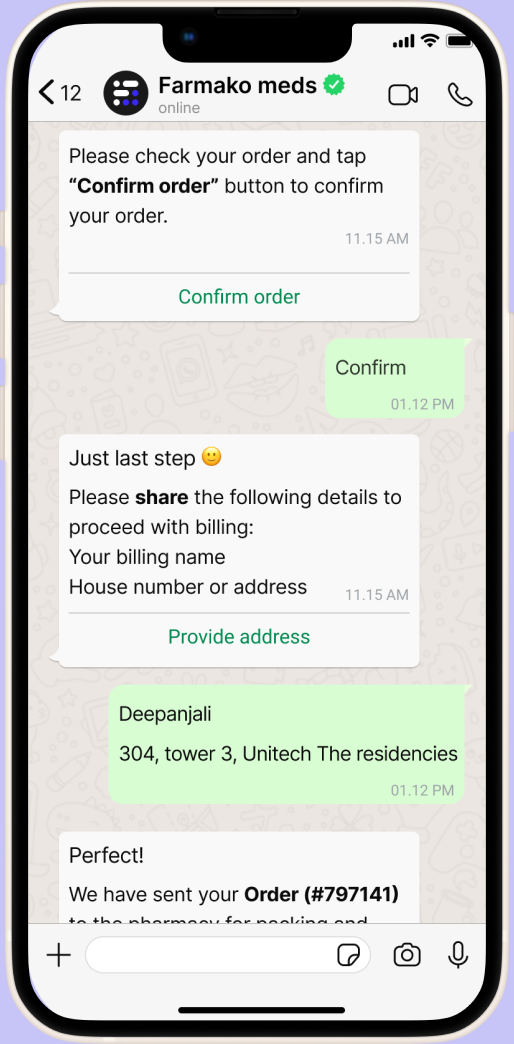
Users were asked for billing and delivery information alongside their medicine details early in the journey. Information collection was front-loaded.
INITIAL CHALLENGE
How might we help customers get their experience easier and faster through WhatsApp?
IDEATION
Initial analysis as per research of user behaviour.
01
Cart confirmed → Address/details → Payment
02
Prescription / Medicine name / Previous order / symptoms
03
Cart confirmed → Address/details → Payment
04
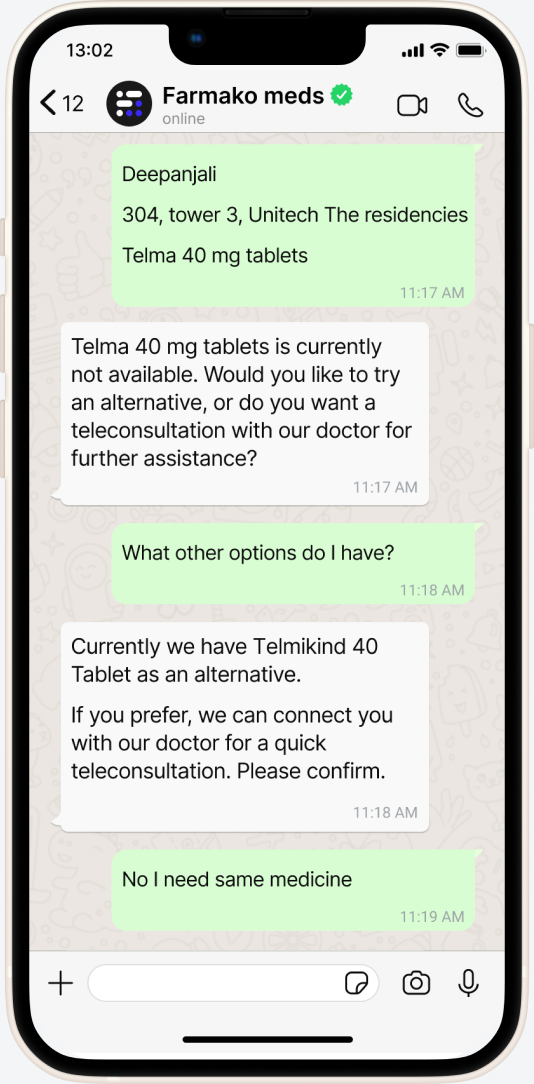
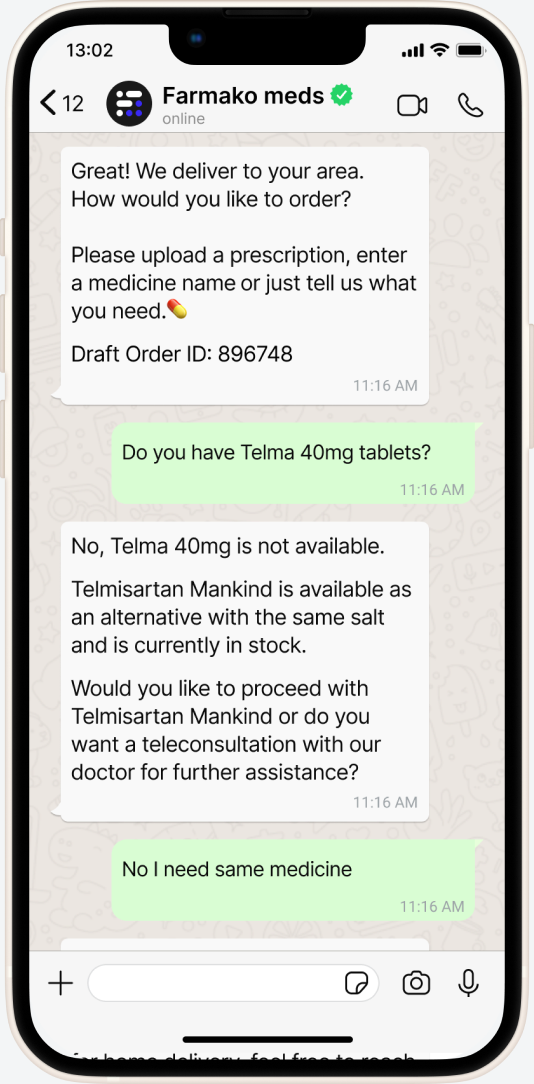
Unavailable → Alternatives → Revised cart
CONSTRAINTS
Farmako needed customers' locations upfront to check nearby medicine stock and delivery availability. At the same time, WhatsApp's interaction limits restricted how much flexibility we could introduce into the conversation.
The challenge was to make the flow feel responsive to customer needs while working within these constraints.
CUSTOMER EXPECTATION
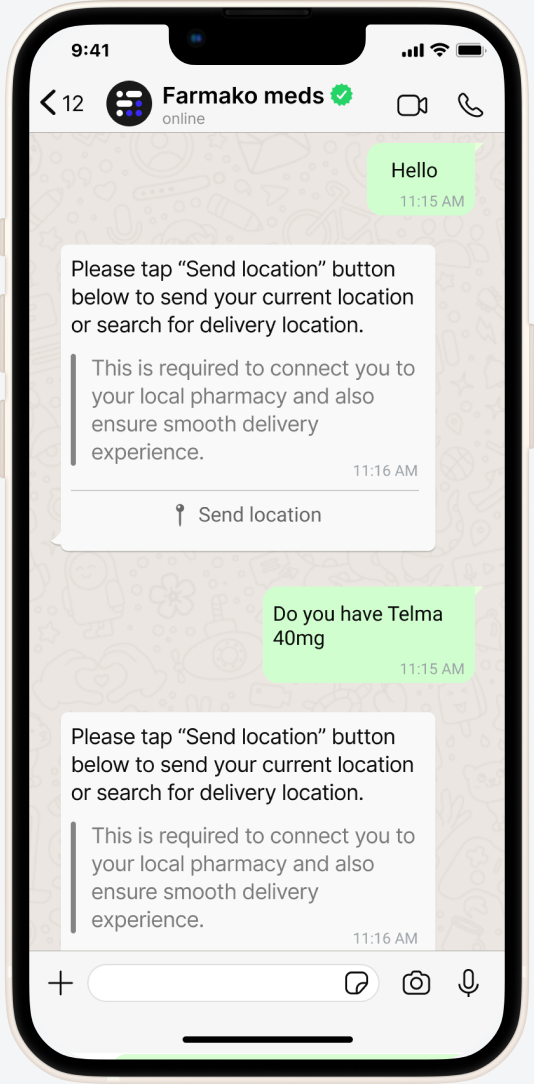
Do you have Telma 40 mg?
Wants to check medicine availability
V/S
SYSTEM REQUIREMENT
Please share your location to continue.
Needs location to check nearby stock
DESIGN DECISIONS
The existing bot expected customers to follow a fixed sequence. But customers often started with medicine names, availability questions or unrelated messages. I explored how the bot could respond to their intent while still collecting the information required to check stock.
DESIGN DECISION 1SHIPPED
Before asking for location, the bot explains why Farmako needs it: to check nearby stock and delivery availability.
Principle
Explain requirement before asking
DESIGN DECISION 2PROPOSED
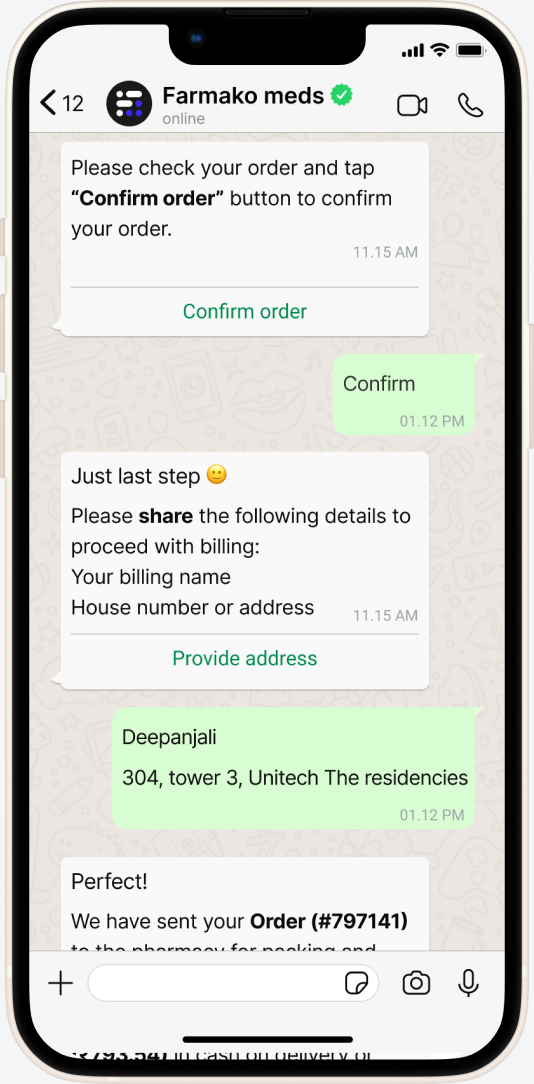
Instead of presenting every order requirement at once, the proposed conversation collects additional details as they become relevant, while retaining mandatory checks.
Principle
Collect progressively, not all at once
DESIGN DECISION 3PROPOSED
When a requested medicine isn't available, the bot can offer an available same-salt alternative and explain the next step instead of leaving customers to figure out what to do.
Principle
Offer a useful next step when the answer is no.
OUTCOME
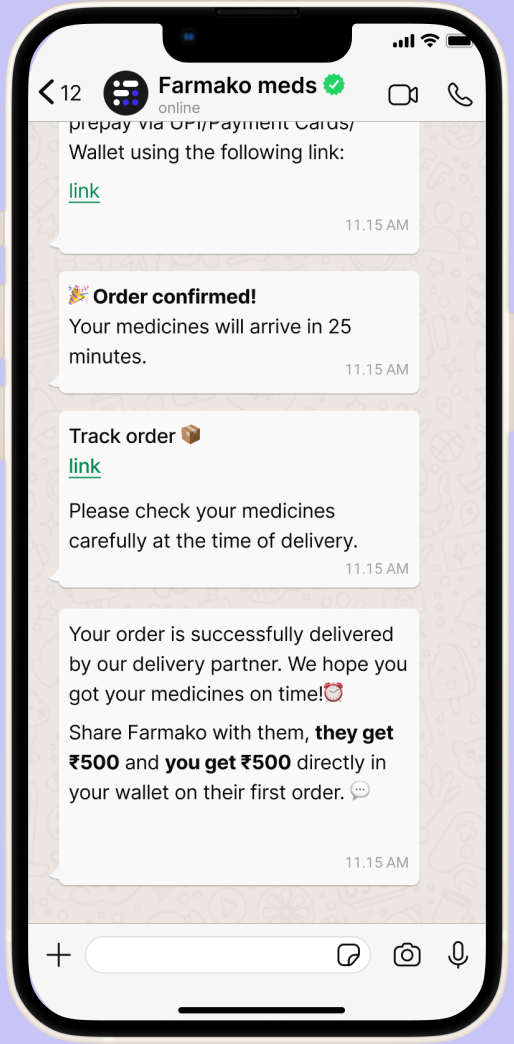
Following the conversational audit, the team implemented an improved location-request message that explained why customers needed to share their location.
The broader conversational flows were explored but were not launched on WhatsApp because of platform constraints. The four entry-path concepts also informed the in-app AI chat exploration.
Early internal observations suggested that more customers were sharing their location after the change.
LEARNINGS & REFLECTION
Working on Farmako's WhatsApp experience changed how I approached conversational UX. The challenge wasn't removing every step. It was making each step feel relevant to what the customer was trying to accomplish.
I would have involved the team earlier around WhatsApp's technical constraints. I designed the four entry paths based on user behavior and the right instinct but didn't know what the platform allowed. Earlier alignment would have kept the solution within real constraints from the start.